
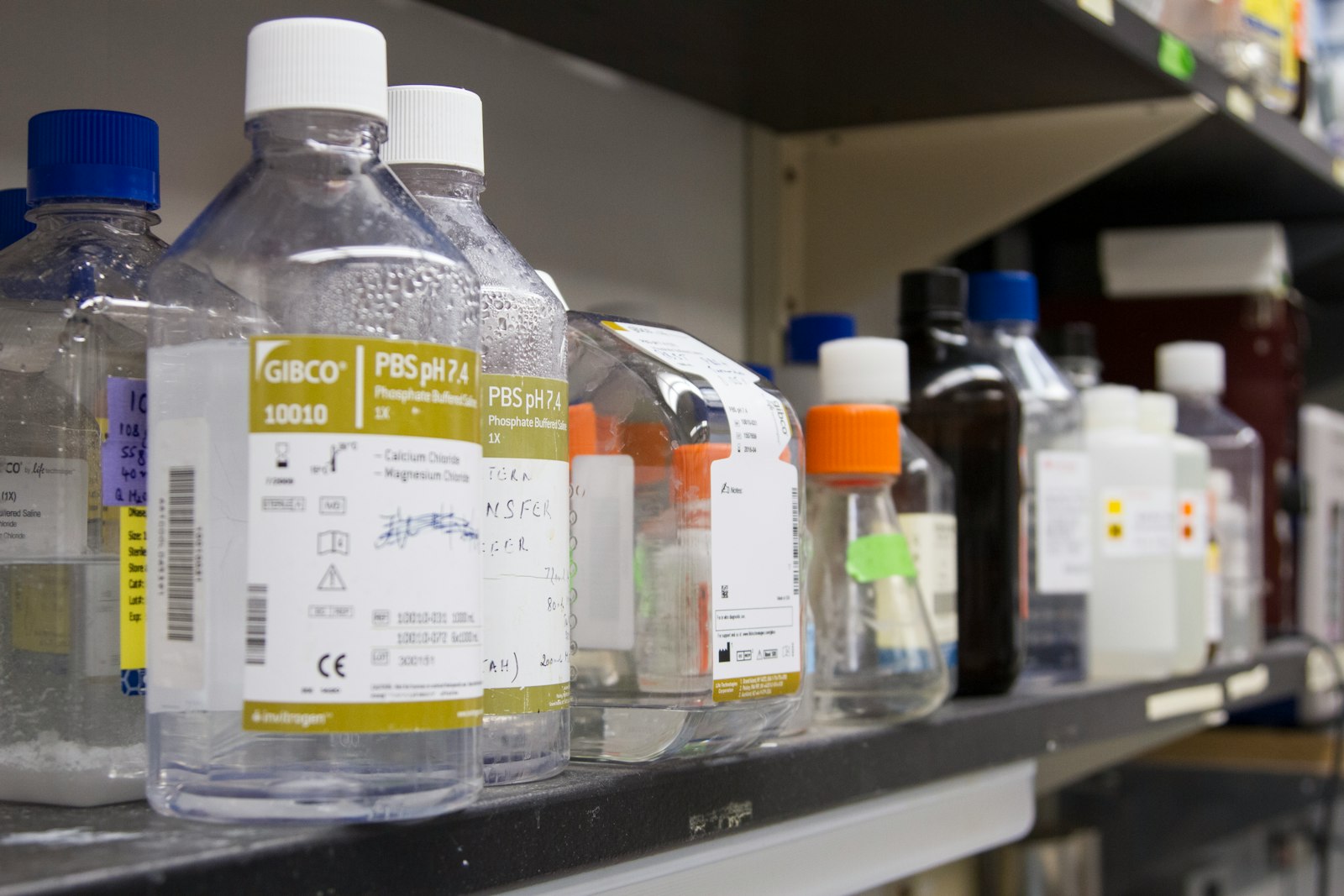
Every experiment is only as reliable as the chemicals that go into it. Whether you run a university teaching lab, a QC department or a contract research organisation, the chemical suppliers you choose affect your data quality, your safety record and your budget. This guide explains what separates a dependable chemical supplier from a risky one, and how to build a supply base that works across the UK, Europe and the USA.
What chemical suppliers actually do
A chemical supplier sources, packages, documents and delivers substances for research, education, manufacturing and testing. In practice the market splits into a few types:
- Manufacturers synthesise or refine chemicals themselves and usually sell in bulk or through distributors.
- Catalogue distributors stock tens of thousands of products from many manufacturers and sell lab-scale pack sizes, often with next-day delivery.
- Specialist suppliers focus on a niche, such as analytical reference standards, isotopically labelled compounds, building blocks for medicinal chemistry or ultra-pure solvents.
- Bulk and industrial suppliers deliver drums, IBCs and tanker loads for production and processing.
Most labs end up using a mix: one or two broad distributors for day-to-day chemical supplies, plus specialists for compounds the big catalogues don’t carry or can’t certify to the level you need. Research Chemicals Kopen
The five things to check before you order
1. Quality and grade
The same compound can be sold at very different purities. A technical-grade solvent that is fine for rinsing glassware can ruin an HPLC run. A good supplier states the grade clearly (for example ACS reagent, analytical reagent, HPLC or pharmacopoeia grade) and says which standard that grade refers to. If a listing only says “high purity” without numbers, ask for specifics.
2. Documentation
Reliable chemical suppliers provide a Safety Data Sheet (SDS) for every hazardous product and a Certificate of Analysis (CoA) for each lot. The CoA should show the lot number, the tests performed, the specification limits and the actual results. Lot-specific documentation is what lets you trace a problem back to a batch, and auditors will ask to see it.
3. Regulatory compliance
Chemicals are among the most regulated goods in commerce. In the EU, suppliers work under REACH and the CLP Regulation; in Great Britain the equivalents are UK REACH and GB CLP; in the USA, OSHA’s Hazard Communication Standard and TSCA apply. On top of that, some substances are controlled because they can be misused: drug precursors, explosives precursors and poisons. A legitimate supplier will ask who you are and why you need a controlled substance, may require licences or end-use declarations, and will refuse sales that don’t add up. Treat those checks as a sign of a trustworthy partner, not an inconvenience.
4. Logistics and storage
Many chemicals are dangerous goods in transport. Ask how products ship (ADR by road in Europe, DOT rules in the USA, IATA rules for air freight), whether temperature-sensitive items travel cold, and how damaged deliveries are handled. Lead times matter too: a supplier holding stock in your region will usually beat one shipping from another continent, and avoids customs delays.
5. Service and total cost
List price is only part of the cost. Factor in delivery charges, hazardous-goods surcharges, minimum order values, packaging returns and the time your team spends chasing orders. Account management, punch-out to your procurement system and responsive technical support can easily outweigh a few percent on price. Bromazolam Kopen
Red flags when evaluating chemical suppliers
- No SDS available, or an SDS that is out of date or for a different product.
- No lot-specific CoA, or a “CoA” that is really a generic specification sheet.
- No physical business address, company registration number or named contact.
- Willingness to sell controlled substances without asking any questions.
- Products marketed with “not for human consumption” as a wink rather than a genuine restriction, which is a common sign that a seller is not serving the research market at all.
- Payment accepted only in cryptocurrency or by transfer to personal accounts.
Building a resilient supplier base
Supply shocks in recent years, from pandemic-era shortages of solvents and pipette tips to shipping disruption, taught many labs not to rely on a single source. A practical approach: Mounjaro Kaufen
- Classify your chemicals. Separate high-volume commodity items (common solvents, acids, buffers) from critical or hard-to-source items.
- Qualify at least two suppliers for critical items, and compare a lot from each before you actually need the backup.
- Agree framework pricing for commodity items with your main distributor.
- Keep a supplier file with contacts, approved grades, example CoAs and audit notes.
- Review once a year: on-time delivery, quality complaints and price changes.
Chemical suppliers in the UK, Europe and USA
The large international distributors operate in all three regions, which simplifies procurement for multi-site organisations. Regional and specialist chemical suppliers often win on niche range, flexible pack sizes and personal service. When buying across borders, remember that rules differ: a substance freely available in one country may need a licence in another, and since Brexit, shipments between Great Britain and the EU need customs paperwork and may involve separate UK REACH and EU REACH registrations.
We cover regions and grades in more depth in our guides to UK chemical suppliers and reagent chemical grades.
Quick checklist
| Check | What good looks like |
|---|---|
| Grade stated | Named standard (ACS, Ph. Eur., HPLC) with a purity figure |
| CoA | Lot-specific, listing tests and results |
| SDS | Current, in your language, for the correct product |
| Compliance | Asks about end use for controlled items |
| Delivery | Dangerous-goods compliant, with clear lead times |
| Support | Named contact and technical help available |
Frequently asked questions
What is the difference between a chemical supplier and a chemical manufacturer?
A manufacturer makes the substance; a supplier (often a distributor) buys, repackages, documents and sells it. Many large companies do both. Tirzepatide
Can individuals buy from chemical suppliers?
Many lab chemical suppliers sell only to businesses, schools and institutions, and most restrict hazardous or controlled substances. Some sell common chemicals to the public, within the law of each country. Mounjaro Kopen
How do I check that a chemical supplier is legitimate?
Look for company registration, a physical address, real documentation (current SDS and lot-specific CoAs), membership of trade bodies such as the Chemical Business Association in the UK, and a sensible process for controlled substances.
